
Forget Layoffs. CX Teams Are Building New Career Ladders for the AI Era.
The bots don't run themselves. A new Cresta survey finds the people who keep them running are overloaded, untitled, and invisible on the org chart.
Make CX Current News one of your go-to sources on Google


The org chart is lying. AI landed in the contact center and brought a whole layer of human labor with it: curating data so models have context, supervising fleets of agents, catching the hard calls automation can't close. Cresta's recent survey spanning 300 CX, support, and operations leaders finds that 63 percent of organizations are absorbing these responsibilities into existing roles rather than creating new ones. The labor is here. It's the job titles that are lacking.
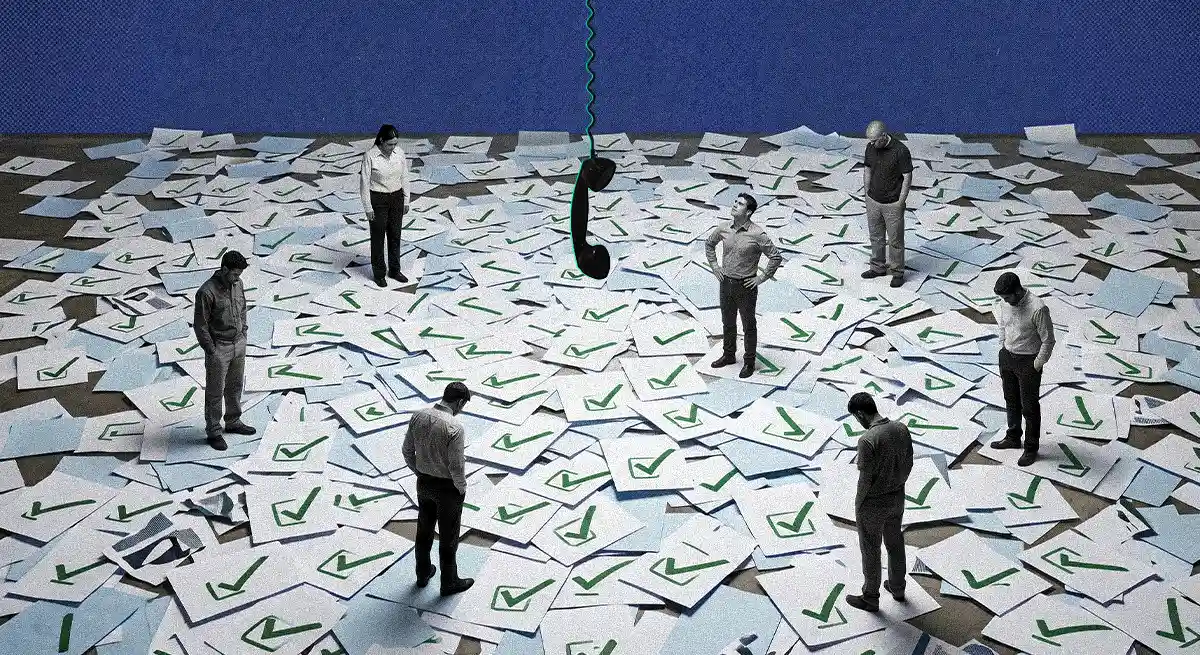
New responsibilities are real even when no new title exists to hold them, which means the work is being done off the books, paid for out of the slack in people's days until there's no slack left to give. Nicholas Babb, CX Director at McKesson, watched it happen to himself. "I became the bottleneck the moment we went to AI," he says. "My team has constant questions about which new technologies we should or shouldn't implement. A huge part of my day is now spent managing those conversations before turning around to set executive expectations on deliverables and benefits." None of that is in his job description. All of it is now his job.
Work, Reworked
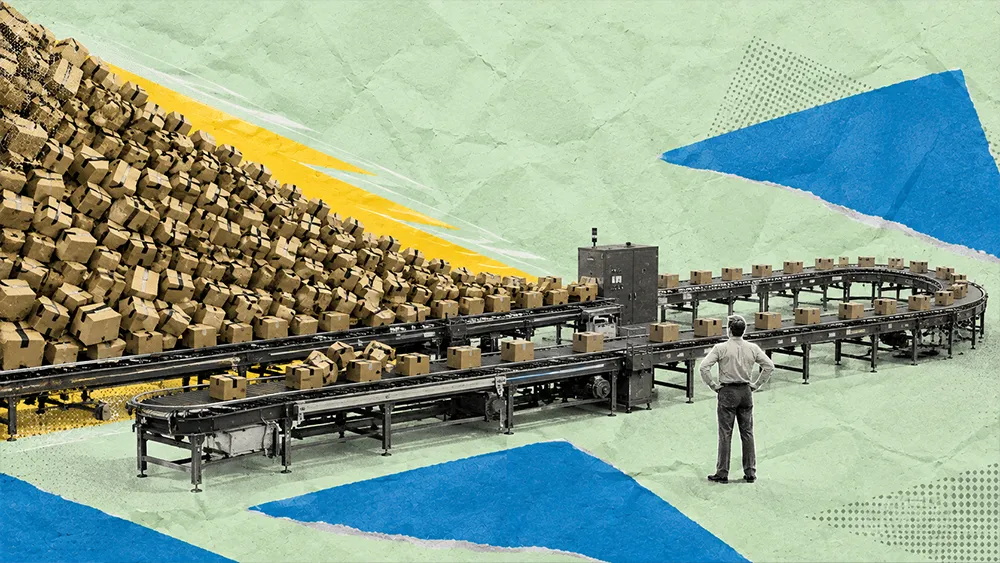
The prevailing story surrounding automation is that it removes work. And it does. But it also shuffles work around, and the labor left behind is heavier than the work that gets automated away. Babb describes a chain where the relief never quite arrives. "Now we have data scientists chasing outputs, which means the design team is waiting on them for strategic direction. So we're building a tool to un-bottleneck them. We're literally building tools to build tools, and at the end of that chain, there's always a new bottleneck waiting."
Daniel Bunton, Director of Customer Support at Lawhive, sees the same relocation from the agent's seat. "AI is fundamentally changing the role of human agents, shifting them into higher-complexity work and new value creation like training systems, validating outputs, and even building the bots themselves." The roles that survive automation are the ones that absorb its supervision.
What that supervision actually looks like is becoming legible. The report's own catalog of emerging work reads like a list of jobs nobody applied for: monitoring AI performance and failures, designing workflows that hand off between human and machine, coaching agents on the AI, managing compliance and risk, turning a flood of conversation data into something a business can act on. A handful of titles are starting to form around it: AI Operations Specialist, Conversation Data and Analytics, AI Risk Manager. But titles are the lagging indicator. The labor is already running, mostly inside roles that were defined for something else.
All Job, No Joy
Rahul Iyer, a digital analytics professional and data strategist at Scotiabank, puts the visibility problem where it belongs: at the executive level. "Executives need to have some sort of awareness of how much work is involved and how humans are making the AI work, and then make the right decisions. I don't think they have that visibility right now." His picture of where this heads is specific enough to plan against. "I'm foreseeing a future where two humans might have a team of 10 or 12 AI agents under them. Each of these AI agents would be evaluated based on their own performance metrics. I'm assuming it would be similar to how performance reviews happen for employees today." That is a management job. Someone is going to do it whether it's budgeted for or not.
Robin Wong, Vice President of Customer Experience at Bounteous, names another cost. "There's a very joyless version of the future where you become an orchestrator of loads of agents and the time you spend doing the thing you love gets squished further and further down." Leaders tend to say the opposite, that AI is opening new ground for people. In the survey, 95 percent of leaders agree AI is creating new advancement opportunities. But that's perception, not proof, and it sits a little uneasily next to Wong's warning that the new orchestrator role can hollow out the very work people came to do. Whether the supervision layer becomes a career or a chore depends entirely on whether anyone treats it as a real one.
Context: Weave It or Leave It
The other half of this hidden labor lies in context. Models don't arrive understanding a business. Someone has to feed them what they don't know, and that someone is usually a mid-level person who has been doing the actual work long enough to know how it really runs. Montserrat Padierna, Customer Intelligence and Experience Lead at Walmart Canada, has a name for them. "'Weavers' are the people, mostly at the mid-level, who are connected to the business and know the processes. We need them more than ever to harness their expertise and feed these AI models so they learn to think with context, not just calculation." Without that feeding, the output looks fine and means less than it appears to. "When you run customer feedback through AI, it's easy to think you're getting the full picture, but sometimes meaning starts to slip away," she says. "The sentiment, the context, and the texture all get lost when the model isn't tuned to how people actually speak."
Most of this hidden labor traces back to one thing: nobody cleaned up the inputs before turning the system on. Robert Vermeersch, Manager of Help Desk Support at GoodLife Fitness, watched it break his workflow. "If the intake isn't right, everything downstream gets harder. You're just moving noise around faster. When the work comes in clean, the rest of the process finally clicks." Automate a messy process and you get faster mess. The labor of cleaning it, structuring it, making it legible to a model, is real and it is human, and it shows up in the day of a skilled technician who used to fix problems and now sorts them. "We were doing a lot of air traffic control," Vermeersch says of the before. "Less of our day was spent actually troubleshooting and fixing issues, and more of it was spent triaging, reassigning, and moving tickets."
What the Machine Can't Do
Knowing what the machine can't do turns out to be the most durable skill in the building. "Gen AI is there to work out the next-best word or do pattern matching," says Wong. "It physically cannot empathize or have enough context to truly understand why a customer is saying something. It can't do multi-step design thinking." The volume work is exactly what gets automated. The judgment work is exactly what gets piled onto whoever's left, usually without a raise or a recount.
The risk in not naming any of this is that the human layer holding the system up can be cut by someone reading only the headcount line. Eric Edwards, Senior Service Line Director of IT Sourcing at Vizient, has thought about what happens when it goes. "The benefit of AI is reducing labor costs, but that is also its central risk. Eliminating a human resource to save money also eliminates the internal knowledge that person holds. If the AI goes down, you've lost your only source of truth. You're left with a huge hole in your operation and nowhere to turn." Padierna sees the same cliff from the supply side, in the people who taught the systems in the first place. "These are the people who lived the shift from analog to digital. They hold decades of practical knowledge that machines still depend on. And now they're reaching retirement. We need to bridge that gap before the knowledge disappears and the models lose their teachers."
So the answer isn't to slow down the automation. The agents are useful, the deflection is real, and the mass layoffs the industry predicted never quite materialized. What hasn't kept up is the org chart. The new work is sitting inside old roles, unnamed and unfunded, carried by mid-level people whose calendars have absorbed a second job nobody wrote down. Name it, title it, and pay for it. Or, keep running an operation on labor you've decided not to acknowledge, right up until the day someone has to step in and run support by hand because the only system that knew how went dark.