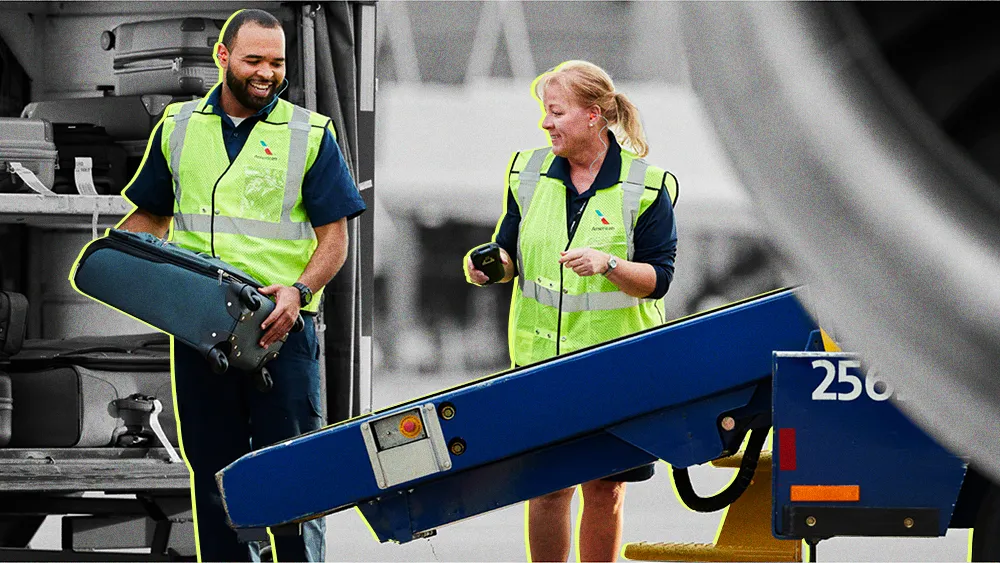

The 'AI Jobs Apocalypse' in Customer Service Was Never Coming. The CEO Leading AI Contact Center Transformation Just Said So on Live TV.
Ping Wu took the contrarian position to AI transformation in CS on CNBC's Squawk Box Europe. Cresta's new survey of 300 CX leaders is the evidence behind it, and it points to an irony the doomsayers never priced in.

Make CX Current News one of your go-to sources on Google


Every few weeks, someone goes on television to announce that customer service is about to be automated out of existence. The bots are about to arrive, they promise, human agents will get shown the door, and a cost center will shrink. It is a tidy story, and a frightening one. On Friday, someone with the standing to know better went on television and said that take is mostly wrong.
"The AI jobs apocalypse in customer service is overblown," Cresta CEO Ping Wu said on CNBC's Squawk Box Europe on Friday. It is a provocative thing to say out loud on business television, where the AI-takes-the-jobs story sells itself. But Wu wasn't freelancing. He was reading off the headline finding of Cresta's new CX Workforce Report, a survey of 300 leaders actually running support, CX, and operations organizations, the people whose budgets and staffing plans turn the theory into an org chart.
And the headlines have it close to backwards. By the operators' own numbers, the technology everyone was sure had come for the jobs is doing something nearer the reverse. The automation that was supposed to empty the floor is instead clearing it of everything except the work that needs a person, which leaves the human role more skilled, more central, and harder to cut than it was before any of this started. The bots took the easy calls. They left the people the ones that actually matter.
The numbers don't say what the layoff stories say
Start with the figure that undercuts the whole apocalypse story. Across the surveyed organizations, job reduction over the past year averaged about 4.2%. That is not the wholesale clear-out implied by every "AI replaces the call center" segment. And nearly half of these organizations expect their staffing to grow over the coming year, not shrink.
The shape of the work points the same way. Only 9% of customer conversations are now fully handled by AI with no human anywhere in the loop. Three-quarters, 76%, run as a human-AI duo, and the rest stay fully human. Ninety-two percent of leaders expect AI to increase demand for skilled people, not erase it. Anyone budgeting next year's headcount off an apocalypse narrative is working from numbers the operators themselves don't recognize.
There is less of the work now, and what is left is heavier.
What's left is the hard part
The efficiency story tends to skip this part, because it muddies the clean line from automation to savings. As AI absorbs the password resets, the balance checks, and the order-status pings, the human queue doesn't shrink to nothing. It concentrates, into edge cases, recovery conversations, and customers who already tried to fix the problem themselves and failed.
Cassie Kozyrkov, the former Chief Decision Scientist at Google who now runs Kozyr, expects this to show up in call times. "I expect that call time for human agents will go up. Because humans are the only ones who can take responsibility, the gnarly, difficult situations that require a lot of human judgment will ultimately end up flowing to them. The hard functions are for the humans."
She is just as critical of the vocabulary the industry built around all this. "When we use metrics like 'containment' and 'deflection,' it's the wrong way to think. It's like treating your precious customers like a zombie virus that needs to be quarantined."
It matters because the old scoreboard now misleads. Average handle time, the industry's most venerable stopwatch, is becoming a liability. "Average handle time as it stands today is just not a good metric anymore," says Alain Mowad, VP of Product and Customer Marketing at Aspect Software. "As the more complex interactions reach agents now, they need more time to get the issue resolved, and the customer expects that." When the three-minute calls resolve themselves and the agent only ever sees the gnarly cases, a rising handle time is a sign the routing is working, not a sign the floor has slowed down.
There is a quieter trap too. Mukta Dhanuka, a product leader and board member whose career runs through SAP, Square, and Meta, warns against celebrating a falling contact volume on its face. "If your support issues have gone down drastically over a few months or even a year, especially in a single category, that alone shouldn't be celebrated without understanding why. You've potentially just created a wall for people to reach you." A drop in contacts can mean you solved the problem, or it can mean people gave up trying, and a deflection rate cannot tell the two apart.
The job now is the handoff
If three out of four conversations are a human-AI duo, then the discipline isn't deflection anymore. It is the handoff: the moment one party decides it is out of its depth and the other takes over. Get that line wrong and the savings evaporate into churn.
The best operators can draw it with a precision most KPIs lack. Patrice Chance, Manager of Member and Provider Operations at Ascension: "If a member is calling to find out how much they have met towards their deductible, AI should be able to handle that and provide the exact balance. But the moment a member states they thought they already met their deductible, that is when AI needs to stop and hand it over to a representative, because now they have to dig a little deeper."
In higher-stakes contexts the line gets drawn harder. "High-urgency issues, especially in fintech, require a more direct human handoff," says Pranay Kasat, who leads customer support technology at Intuit Credit Karma. "For a dispute, a debit card problem, or fraud, you need to bypass the chatbot and provide an immediate, urgent connection to a person."
That shift changes hiring before it ever changes headcount. With the routine gone, the scarce skill is the one automation can't fake. "Emotional intelligence becomes critical in order to problem-solve and empathize as decision-making increases with more complex calls," says Mitch Mann, VP of Member Services at VytlOne, who refuses to even use the word deflection because "it denotes that the interaction isn't important."
Wu's actual argument: one system underneath both
This is where Wu's televised soundbite connects to a thesis. If the future is a hybrid workforce, then the failure mode isn't AI replacing people. It is AI and people working as strangers in the same building, dumping customers into a maze of disconnected handoffs.
"The opportunity isn't AI versus humans," Wu argued. "It's one system underneath both." His framing is that the winning AI agent doesn't get bolted onto a contact center as one more silo. It learns continuously from a company's best human agents, watching how a top performer handles the hard call and surfacing the tribal knowledge that usually walks out the door at the end of a shift. The end consumer gets one experience with shared context instead of a relay race of cold transfers: one intelligence layer beneath every interaction, before, during, and after, where AI and humans share one memory and one feedback loop.
It is, plainly, a pitch for what Cresta sells. But it arrives at the same place the report's independent voices keep reaching from different directions. The question that matters has shifted from how many humans you removed to whether the hard conversations actually land.
Wes Griffith, Senior Director of Global Consumer Support Experience at Coinbase, has stopped pretending otherwise. "Cost and efficiency are simply guardrail metrics for us. They are important, but they are not the point. CSAT is our number one metric." That produces decisions an efficiency-first team would never make, such as pulling automated experiences back out of production. "An automated experience can tell a customer that they've made an irreversible error, but it cannot meet them in that moment of empathy. We've actually pulled some of those use cases from production, and they now create an immediate express path to a human." It costs more, and in his view it is plainly the right call.
The takeaway
The apocalypse framing was always more compelling than it was accurate, and it had the plot backwards besides. The technology everyone braced for as the thing that would clear the floor is the same technology now making the people on it harder to do without. What Cresta's data describes is less dramatic and harder to pull off. The headcount mostly holds, but the people are different and the calls are heavier, and the working model is AI and humans drawing on one shared brain rather than one replacing the other. The companies that win the next year won't be the ones that bragged loudest about how many humans they took out of the loop. They will be the ones who could tell the difference between a problem that got solved and a customer who quietly gave up, and who built one system that kept the hardest conversations from falling through the gap. The jobs were never what AI was coming for. The easy version of the job was.