
Voice of Customer Programs Fail When Insight Never Reaches the Workflow
Laura Downing, VP of Global CX Strategy Consulting at TP, argues that most organizations already have more than enough customer feedback and that the real failure is the absence of an operating model that ties insight to ownership, workflow changes, and measurable business outcomes.

Make CX Current News one of your go-to sources on Google


Most organizations are not short on customer feedback. They're short on an operating model that turns feedback into action. They have surveys, transcripts, call recordings, journey maps, dashboards, and all the tools. But the work breaks down when no one owns the action.
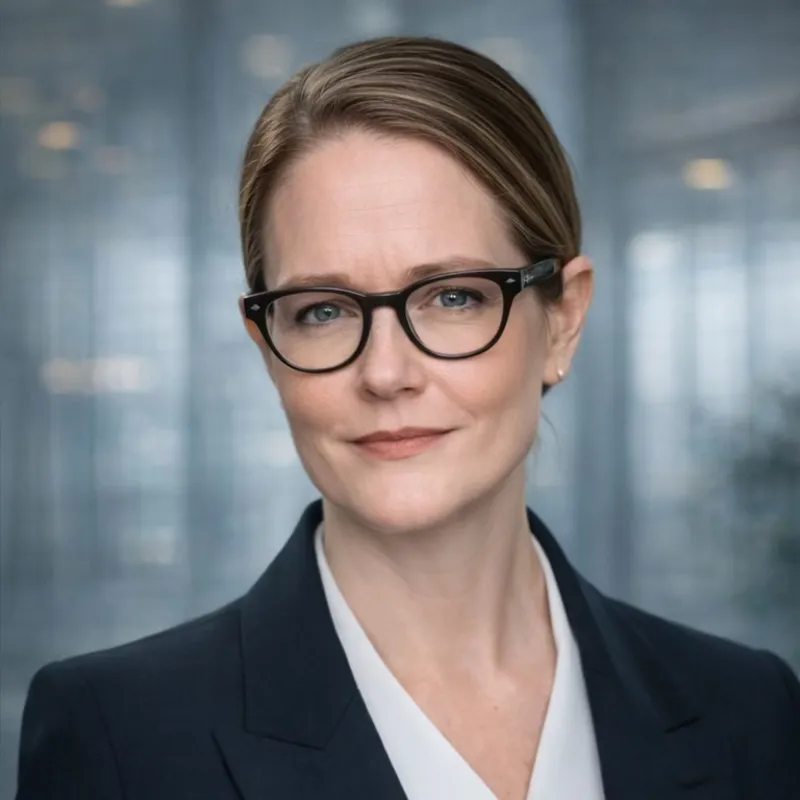
Laura Downing
Companies are drowning in customer feedback. They have the surveys, the transcripts, the call recordings, the journey maps, and the dashboards. The tools are not the problem. The problem is that insight rarely reaches the place where work actually happens: routing logic, coaching sessions, knowledge bases, product prioritization, digital containment, or service recovery. When no one owns the action, VOC becomes what one executive calls "corporate theater."
Laura Downing, VP of Global Customer Experience Strategy Consulting at TP (formerly Teleperformance), has spent over 15 years helping enterprise organizations modernize customer experience, revenue, and operations through AI-enabled, human-in-the-loop operating models. Her work spans BPO, travel, hospitality, retail, logistics, healthcare, and financial services. She holds a Lean Six Sigma Master Black Belt, a PMP, and a Prosci Change Management certification, and has led programs that improved CSAT by up to 30 points and delivered over $8 million in operational savings.
"Most organizations are not short on customer feedback. They're short on an operating model that turns feedback into action. They have surveys, transcripts, call recordings, journey maps, dashboards, and all the tools. But the work breaks down when no one owns the action," says Downing.
Where smart teams get stuck
Downing identifies three failure points that consistently prevent organizations from converting customer insight into operational change.
First, teams stop at the insight. They collect the feedback, categorize the themes, and report the trends. But the analysis never gets embedded into the systems where decisions are made. "The insights never get embedded into places where work actually happens, like routing, coaching, knowledge management, product prioritization, or service recovery."
Second, ownership is fragmented. CX owns the dashboard. Operations owns the process. Product owns the roadmap. "When everyone owns a piece, no one owns the outcome." The result is that a report can identify a problem, but no single person is accountable for solving it, tracking the fix, or following up on whether it worked.
Third, AI exposes the foundation. Downing is direct about this. "Just because you can automate something doesn't mean you should. AI accelerates whatever foundation already exists. If the knowledge layer is poor, you're just making a bad foundation faster." AI does not fix messy knowledge bases, fragmented data, or inconsistent processes. It amplifies them.
From reporting to execution
The teams that break through treat VOC as a continuous improvement discipline rather than a reporting function. Downing, drawing on her Six Sigma background, outlines a practical starting point: pick one business problem with measurable impact. Repeat contacts, onboarding friction, or failed self-service are all strong candidates. "Start with the biggest win, the low-hanging fruit. That way, you can gain momentum. Quick wins build credibility much faster than trying to launch a perfect enterprise VOC program all at once."
From there, the operating model needs three components. First, connect VOC to specific decision points in the workflow: what changes in the knowledge base, agent behavior, routing logic, or customer communication. Second, assign one accountable owner with a deadline. "There should be one person who has ownership over the action. If FCR falls below the standard we want, there should be one person responsible for bringing it back up." Third, measure continuously against business outcomes: cost to serve, FCR, CSAT, NPS, churn, retention, and average handle time.
The results, when the model works, are significant. Downing cites programs that drive 15 to 30 point CSAT improvements, reduce cost to serve by roughly 18% or more, and identify multimillion-dollar optimization opportunities. "VOC and CX transformation programs can really make an impact on your organization when insight is connected to execution."
AI accelerates, it does not cure
Downing positions AI as a powerful accelerator for mature VOC programs, not a substitute for fixing foundational problems. The best use of AI in VOC is not summarizing feedback faster. It is helping organize and detect patterns earlier, prioritize issues intelligently, and close the loop in near real time. But all of that requires clean knowledge, structured data, and clear processes underneath.
Many organizations are already giving employees enterprise-wide access to LLM platforms as a baseline productivity tool. That is a useful first step. But the real shift happens when AI moves beyond individual productivity and begins operating within the core CX workflow itself. Downing frames the question simply. "The question is not what our customers are saying. The question is what are we changing because of what our customers are saying? If VOC is not connected to ownership, workflow, and financial outcomes, it's just corporate theater."