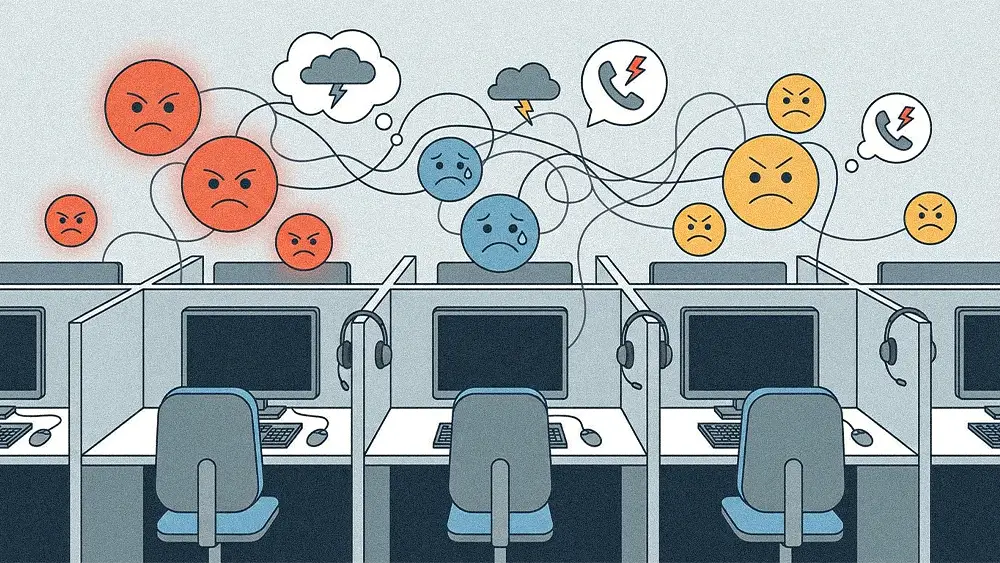

AI Chaos Pushes Companies Toward Centralized Oversight And Disciplined Use Case Design
Henré Venter, Head of Portfolio Operations at Flyp, says uncontrolled AI experimentation creates more chaos than it solves, but governance, data hygiene, and clear ownership turn the technology into a real multiplier.

Make CX Current News one of your go-to sources on Google


AI is a multiplier, but only if you've got the right structure in place. If your foundations aren't solid, it doesn't fix the problem, it just makes the mess bigger.

Henré Venter
It's easy to buy into the hype around AI, but bolting an algorithm onto a broken workflow rarely fixes the underlying mess. As the initial excitement settles and adoption in customer and portfolio operations matures, many operators are finding that automation cannot sort out process issues on its own. When workflows, ownership, and data are unclear, new tools usually make a bad problem worse.
Henré Venter tackles these hurdles daily as the Head of Portfolio Operations at Flyp. Overseeing the end-to-end asset lifecycle for the UK-based PropTech company's residential property portfolio, he previously built its Client Success function from scratch to manage hundreds of properties. Before that, he maintained a perfect 100 Net Promoter Score for six consecutive months while running city operations in Cape Town. He knows firsthand that AI is only as good as the operational structure beneath it.
"AI is a multiplier, but only if you've got the right structure in place. If your foundations aren't solid, it doesn't fix the problem, it just makes the mess bigger," says Venter. That lesson came from direct experience. At Flyp, early experiments with AI tools led to overlapping systems, fragmented ownership, and a cleanup effort that consumed more time than the original rollout saved. For many fast-moving teams where employees frequently wear multiple hats, the same pattern plays out: uncontrolled experimentation creates more chaos than it resolves.
Cleaning up the chaos
When AI first arrived at Flyp, adoption happened organically and without guardrails. Everyone built their own systems, and the result was a patchwork of disconnected tools with no central ownership.
"When AI came into play, everyone started building their own little systems, and in the end, it created absolute chaos because it wasn't controlled at a business level," Venter says. "Now we are in a massive cleanup mode because we've realized the foundations were missing, and that clear ownership of who the product owner is."
Without those basics, the tools never reach their potential. "If you don't have the basics and you use AI, then you're not fully utilizing it," he says. "You're probably just using it to draft your emails better. You're probably using it as a bit of a think tank, but not related to your work in any way. It's like sticking duct tape everywhere."
Locking down the rollout
To fix the fragmentation, Flyp formally designated AI champions within each division and created a unified oversight committee. That move brought the underlying data challenge into focus, requiring a strict governance structure to keep departments aligned.
Forcing data hygiene down the pipeline naturally frustrates sales teams. In many organizations, front-of-funnel teams are incentivized for speed, which frequently leaves data cleanliness as a secondary priority. Venter tackles the friction by pushing for a resilience playbook grounded in simple, agentic use cases.
"There are certain departments that will never prioritize data cleanliness, and one of those is unfortunately the front of the funnel. It's your BDs," Venter says. "It's sitting down with them and making sure that they understand: if we're not doing things right here, it snowballs out of control at the other end."
By establishing a foundational approach to customer experience data, he starts with clear, visible wins. "What you see a lot is these smaller AI tools quickly organize their inboxes, and all of a sudden they are focusing on the leads that make sense rather than wasting time on other things," he says. "So it's all about buy-in, and focusing on the simple stuff first."
Triage without tears
Once those foundations hold firm, the technology acts as a force multiplier rather than a patch. Flyp uses algorithms to triage issues upstream by funneling maintenance requests directly to the right person and assigning urgency without human intervention.
"We use it as a funnel for all our maintenance issues," Venter says. "All we've done is feed it our documentation and real-life examples. We've guided it, and it's now taking on a life of its own. It's now recognizing when properties have the same issues all the time, and none of my agents need to step in."
The same infrastructure supports enterprise-grade returns by analyzing layered financial models. Because short-term rental availability dictates Flyp's financing, the system predicts revenue impacts and flags risks before they materialize. It mirrors how operators integrate automation into operational centers to support decision-making without inflating headcount.
"What AI enables us to do is analyze those risks before they happen and let us know: this deal is going to go south if we don't act, and here's why," he says. "Previously, you needed someone on a higher payroll to sit there and analyze things behind a desk with three, four screens. Now you don't need that."
The human line
Those deployments sit on a firm boundary. Algorithms handle repetitive administrative work so human agents can focus on client relationships. Property sales are a highly emotional journey, and rollout strategies at Flyp run on the expectation that people paying for a service still want human connection.
That philosophy tracks with industry-wide discussions about how customers perceive automated interactions and the nuances of earning their trust.
"Make it better for your customers, but remember that they still want to feel heard and understood," Venter says. "The reality is because we've all grown up with AI now, everyone that's working can identify AI very quickly. It's that human instinct. You just know when someone has sent you a ChatGPT email."
Measuring the balance
Keeping that balance in check requires constant measurement. Quantitative metrics like NPS and CSAT remain standard markers, but Venter also pushes his teams to simply pick up the phone. Many organizations rely on conversation intelligence solutions to surface themes from interactions, yet direct calls offer the clearest read on how buyers react to new workflows.
"Don't neglect your CS team," Venter says. "They will also tell you, because they are on the forefront, if it's not improving their life, then it's also not improving the customer's life. You've got two very good parameters of where this balance sits."
Breaking the echo chamber
Beyond the walls of his own company, Venter points out that leaders must be deliberate about where they get their advice. The tech sector is packed with networking events, but attendees often find those conversations drifting toward vendor pitches rather than practical, peer-to-peer discussions. Looking sideways at colleagues in other departments or bringing in fresh, unbiased eyes can break entrenched habits and prevent teams from buying useless software.
"I would encourage people, as founders and leaders in business, to come together more and discuss AI, because doing it in isolation is dangerous," he says. "You will get more bang for your buck if you actually engage with other leaders in the business to see what has worked and what has not."