

I can teach you process all day. I can teach you tools. But if you don’t have those soft people skills, that’s the harder thing to teach.
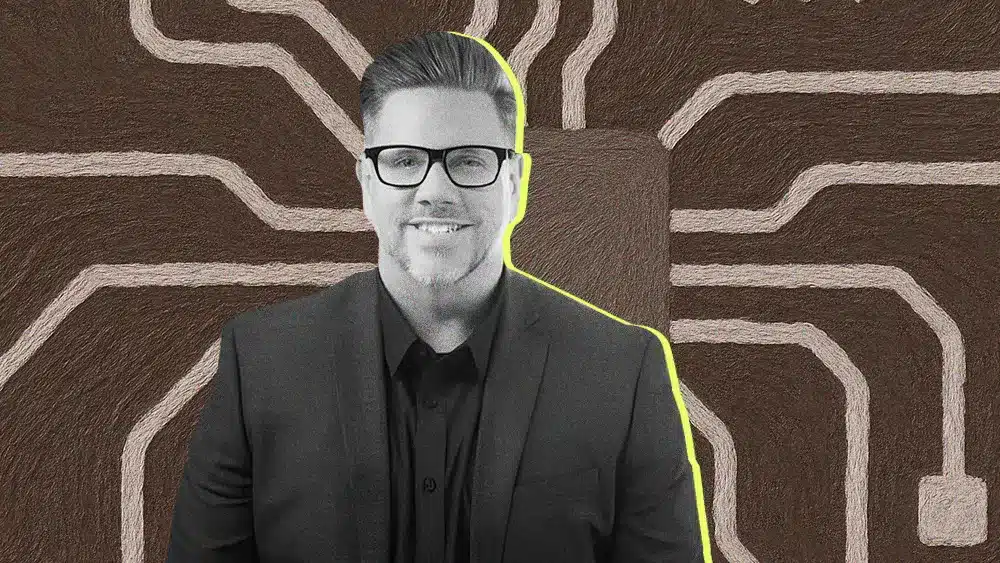
 Dylan BatesHead of Customer Success @ HeyPros
Customer success training has a blind spot. Teams invest heavily in process frameworks, KPI dashboards, and tooling certifications, and the people who come out the other side can run a playbook but struggle to read a room. The result is CS professionals who generate activity without generating insight, producing short-term metrics that mask long-term retention risk.
Dylan Bates is Head of Customer Success at HeyPros, a platform that helps general contractors and subcontractors manage work orders, estimates, projects, and invoices in one place. He owns the full customer lifecycle for a book of commercial clients ranging from mid-market to large enterprise accounts. His team serves tradespeople and construction companies, a user base with low tolerance for jargon and a sharp radar for anything scripted.
"I can teach you process all day. I can teach you tools. But if you don't have those soft people skills, that's the harder thing to teach," says Bates.
The best reps come from unexpected places
Bates has found that his strongest hires tend to come from retail, hospitality, and other fields outside of traditional CS. What they bring, empathetic listening, simple communication, and the ability to ask the right questions, is exactly what formal CS training often skips. "Some of the least prepared customer success folks I've worked with have been people with strictly customer success backgrounds," he says. "There is an overemphasis on processes and tools versus the hard skills that are foundational to the whole approach."
The consequence is measurable. Teams that optimize for efficiency metrics can produce strong short-term KPIs while quietly eroding the relationships that drive retention. "You'll see a lot of activity, a lot of motion," Bates says. "But at the end of the day, it's not gaining insights into who your customers are or what drives them."
Silence is the loudest churn signal
In live conversations, the skill that separates strong reps from average ones is the ability to recognize real-time signals and act on them in the moment. Bates trains his team through weekly case study reviews, role play with customer archetypes, and a deliberate three-month ramp before new hires touch a live account. The goal is to build a library of pattern recognition before the rep ever faces a customer.
What does a great conversation sound like? "Listening more than speaking. Not asking yes or no questions. Coming from a place of, 'I've observed X, Y, and Z in your account this week, what was the goal behind that action?'" Bates explains. The biggest red flag is the opposite of what most teams expect. "It feels counterintuitive, but if they're not complaining about something, then maybe they've already made up their mind to leave," he says. "Even our best, most engaged customers always have some little thing they want tweaked. The customers at risk are the ones that go quiet."
Bates uses Claude, Intercom's Fin chatbot, and Fathom call recording together to eliminate admin work and surface patterns across customer interactions. But he draws a hard line at replacing live judgment. "I don't want AI to replace any of your customer interactions. I don't want it to replace your thinking. I want you to use it to organize your thoughts and save time on busy work so you can spend time generating value for our customers," he says.
He backs the point with regular audits and real-world cautionary examples, including a recent Oregon case where a law firm was fined $10,000 for citing AI-hallucinated case law. "These tools do a really good job of sounding authoritative, but they have a hard time admitting to their own knowledge gaps," Bates warns.
Frameworks, not scripts
Even with templates in place, Bates gives his team wide latitude to personalize. "We're not a company where you have to communicate this exact way to everyone. Stay on message, but personalize it in a way that feels natural to you," he says. For meeting prep, his guidance is minimal by design: find two numbers that matter, build the conversation around those, and leave room for the customer to drive. "When you hit a customer with a five-part question, you lose any semblance of purpose."
The approach reflects a deeper conviction about where CX is headed. As automation scales and more interactions pass through AI-driven sequences, Bates believes the companies that stand out will be those that still feel human. His customers, busy contractors who detect inauthenticity fast, have already validated the model.
"As we move towards a world with so much more automation, what's going to set companies apart is those that can create and maintain authentic human relationships," Bates concludes. "Listening, explaining things simply, recognizing patterns. That's customer success."