
Why AI-Driven Workforce Allocation Beats Basic Routing Rules In Complex CSS
Alexander Labori, a Principal Consultant, explains how AI-powered case complexity scoring shifts the focus from static routing rules to real-time workforce allocation, matching the right customers to the right support engineers before frustration sets in.

Make CX Current News one of your go-to sources on Google


It’s not about removing the workforce. It’s about making the workforce more powerful and making better decisions in an automated manner using generative AI. What we’re doing now is asking how agentic AI can help make those decisions in real time.

Alexander Labori
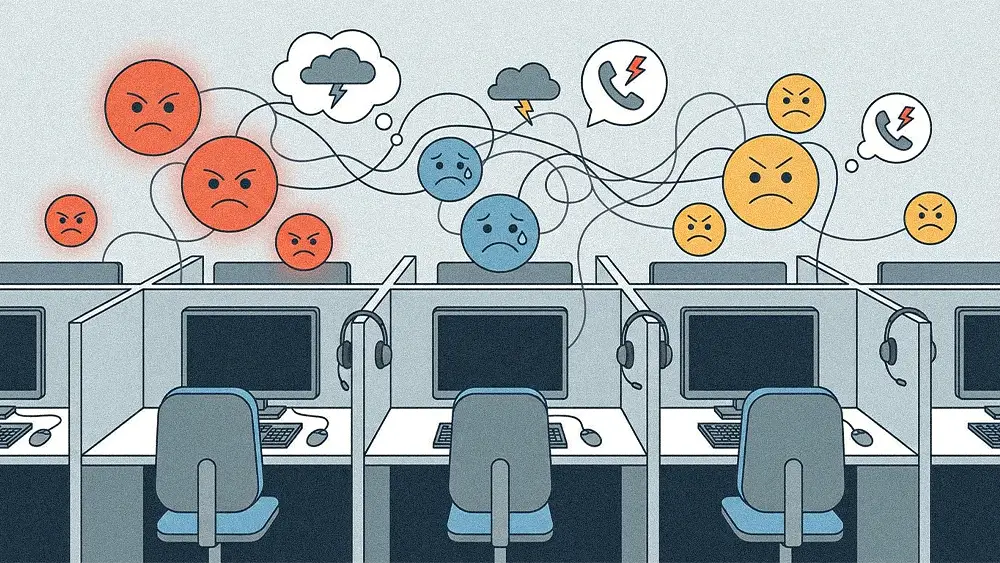
Support teams pour resources into building smarter routing logic, but the real operational bottleneck is often one step earlier. Before a case ever hits a queue, someone has to decide how many cases of what complexity should go where, and to whom. Get that allocation wrong and even perfect routing rules just move the wrong work to the wrong people faster. That workforce management layer is where AI delivers its biggest return.
Alexander Labori is a Principal Consultant with Microsoft CSS Strategy & Operations through Humbition Consulting, where he leads deployment and execution for a case complexity model that aligns business, engineering, and support operations. With nearly 20 years at Microsoft across Xbox support, AI enablement, planning, and business intelligence, Labori has worked the full arc from Excel macros to agentic AI. His current work focuses on using AI-driven complexity scoring to make workforce allocation decisions in real time across Microsoft's commercial support operations.
"It's not about removing the workforce. It's about making the workforce more powerful, making better data-driven decisions in an automated manner using generative AI," says Labori. "What we're doing next is asking how agentic AI can help make those decisions in real time." The system Labori describes analyzes massive volumes of historical case data, including escalation rates, days to close, engineer involvement from product groups, and resolution patterns, to assign a complexity score to each incoming case. That score then drives allocation: high-complexity cases go to full-time support engineers with deeper resources and direct access to product teams, while lower-complexity work flows to delivery partners built for pace.
Allocation over routing: The distinction matters. Routing rules determine where a case goes once it enters the system. Allocation determines how many cases of what type each team should receive in the first place. "We take a step back and say, all right, we can develop an algorithm on how to route. But where generative AI really solves the pain is the workforce management piece," Labori explains.
Eliminating the lag: Without upfront allocation, overflow cases sit in one queue for hours before getting rerouted, invisible to the customer but costly in satisfaction and resolution time. "What if we get the right number of cases to the right number of support engineers up front, and right away those other customers are going to be spilling over? Let's just get them going. Let's not make them wait another 12 to 18 hours before they actually get routed to the right place."
Proving it out: Labori measures success through a specific set of outcome-based KPIs rather than routing volume alone. "If we have a reduction in escalations, that's a success. If we solve cases faster, that's a success. And then of course we have customer and employee satisfaction."
The model operates at a granular level, scoring cases down to specific support area paths, device types, error categories, and customer segments. Premier-level customers with paid support contracts bypass the system entirely and route straight to dedicated queues. For everything else, the complexity score drives the decision. Labori estimates the model can meaningfully impact roughly 30 to 40 percent of overall volume, a realistic scope that reflects the principle of not trying to boil the ocean.
The human floor: Even as AI handles allocation at scale, Labori is clear about where the line stays. "We're always going to lean towards the human touch. We may call ourselves support engineers, but we are first and foremost customer service," he says. "With dwindling resources and everybody expected to do more with less, let's make sure we get the right customers to the right place to have the right conversations."
What comes next: The current model scores complexity from historical data, but it cannot yet detect live customer intent or emotional state. Labori sees the next phase as deploying multiple purpose-built agents rather than one large model: one for intent, another for sentiment, another for escalation risk. "Let's get away from the algorithm and let AI do what it's intended to do. I've taught it enough. Now it needs to teach me."
For Labori, the broader takeaway extends well beyond Microsoft's support operations. He was part of Microsoft's first major layoff round in July 2024, spent seven months away from the industry, and returned with a clearer perspective on what AI means for careers in CX. The work he does now, designing how AI and humans operate together, reinforces his conviction that the fear is misplaced.
"There’s a lot of fear around job security with Everybody fears AI, and but when I look at this type of work, and those fears go away," Labori says. "It lets me know I can work with AI, I can empower AI, I can actually make it better. The one thing I want people to take away is don't fear it. Embrace it. It's not going anywhere."
The views and opinions expressed are those of Alexander Labori and do not represent the official policy or position of any organization.