
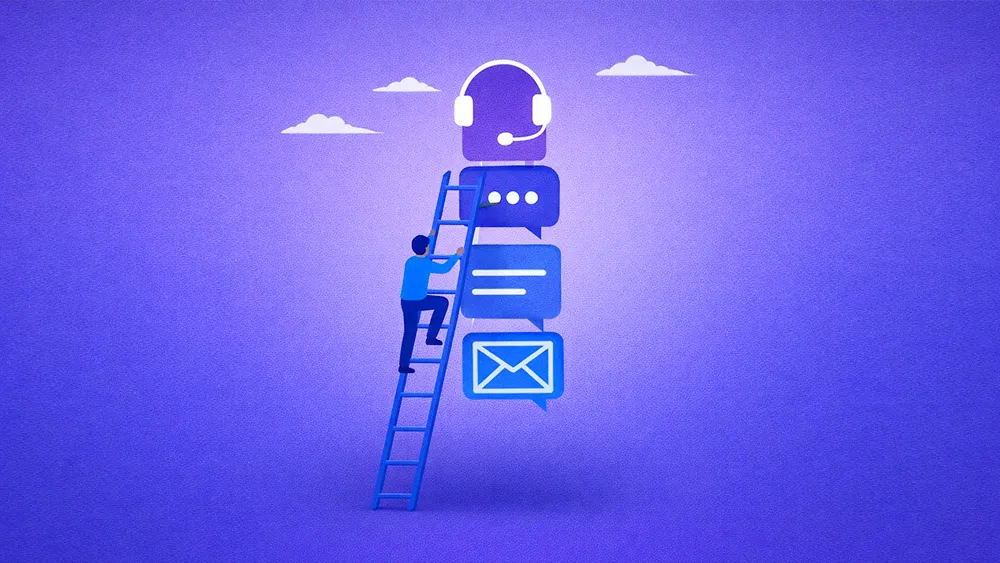
An ideal omnichannel journey isn’t about having every channel. It’s about having the right channel, with context that follows the member wherever they go, so they never have to repeat themselves.
 Pranay KasatCX Leader @ Intuit Credit Karma
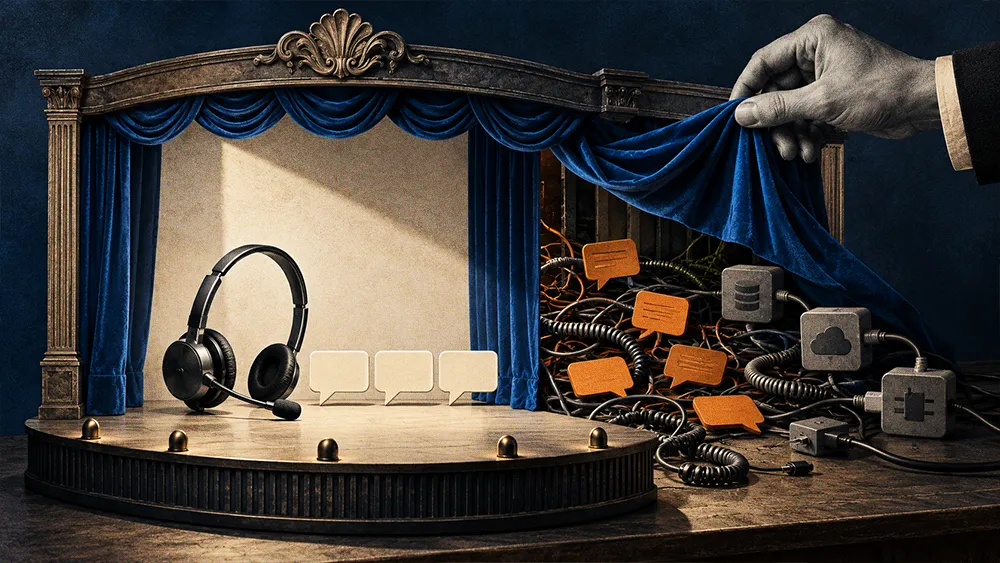
Customer experience breaks down when support channels multiply without a system connecting them. Chat, messaging, apps, and social care often expand faster than the architecture that holds them together, forcing customers to repeat their story every time the interaction moves to a new touchpoint. The modern omnichannel strategy focuses on continuity: a support environment where intent, history, and context travel with the customer across channels. Delivering that continuity depends on AI systems that guide people to the right channel at the right moment while preserving the full context of the journey from start to finish.
Pranay Kasat, who leads the Customer Support Technology function at Intuit Credit Karma, sees continuity as the foundation of modern support design. Over a 15-year career that includes building service ecosystems at Airbnb, he has transformed service organizations into strategic growth functions driven by AI. Kasat focuses on the central goal of removing the need for customers to reiterate their request. Whether a member begins in the app, moves through the help center, or escalates to chat or phone, AI captures and summarizes the journey so each step builds on the last.
"An ideal omnichannel journey isn’t about having every channel. It’s about having the right channel, with context that follows the member wherever they go, so they never have to repeat themselves," says Kasat. Putting that philosophy into action often starts with simplifying the channel landscape. Kasat encourages leaders to question the assumption that more options always improve the experience and instead identify which touchpoints genuinely support customer needs. That process typically involves a careful review of the support ecosystem to determine whether organizations have too many channels, too few, or simply the wrong ones.
More channels, more problems: For Kasat’s team at Credit Karma, that evaluation led to a clear decision: retire traditional email support and prioritize real-time channels such as chat and phone. The shift ensures that high-urgency financial questions reach a live response faster, aligning support design with the speed customers expect when dealing with sensitive issues. "Leaders need to ask themselves if they actually need all the available channels," he says. "It's easy to add chat, telephony, and SMS, but the 'more is better' approach is often wrong. The first step is to strategically question if you have the right channels to serve your business's individual use case."
Urgency first: Once the strategic channels are chosen, the focus turns to executing a responsive system where routing is based on a customer's real-time needs, powered by intent-based routing using LLMs. Kasat says the approach reframes success by moving the focus away from older, deflection-obsessed metrics and toward a new scorecard. "High-urgency issues, especially in fintech, require a more direct human handoff. For a dispute, a debit card problem, or fraud, you need to bypass the chatbot and provide an immediate, urgent connection to a person."
Follow the friction: Kasat highlights end-to-end average handle time as a core metric for measuring customer effort. By tracking the full journey from help center search to bot interaction to agent resolution, it provides a more accurate picture of the support experience. "You have to analyze your top contact drivers and ask if there are product-based solutions," he explains. "A password reset, for instance, shouldn't require customer support. That's a product issue for the identity team to solve. The goal is to solve it at the source so the customer doesn't need to contact a live agent or even a chatbot in the first place."
The result is an intelligent support system that allows a function often viewed as a cost center to evolve into a growth driver. By using AI to handle routine tasks, organizations can elevate human agents into a more consultative, "concierge" role. For Kasat, defining the boundary between automation and human support requires disciplined experimentation. Teams can test bot-led resolutions for certain issues while closely monitoring CSAT and resolution rates.
The concierge touch: Automation handles routine inquiries, allowing agents to focus on interactions that require empathy and judgment. In these cases, a "warm handoff" from bot to agent can turn a simple support interaction into a trust-building moment. "A bot can give you a help center article explaining why a credit score dipped, but this is a perfect opportunity for a warm handoff to a live agent," Kasat explains. "The agent's role can shift to that of a concierge, where they first help the member understand the reasons for the score dip, and then suggest a relevant product, like Credit Builder, to help them repair their credit."
Kasat's philosophy is guided by a simple rule: the right to suggest is earned only after the customer’s initial problem is fully resolved. From there, agents can offer a solution that directly addresses the member’s underlying financial needs, supported by algorithms that surface the most relevant product recommendation directly within the agent’s CRM. The aim is to position the organization as a trusted partner, one that helps members make better decisions rather than pushing a sale. "The rule should be: solve first and suggest second," he concludes. "The keyword is suggest, not sell. You must solve the member's problem first before a relevant suggestion can be made."