

Stakeholder Density And Alignment Can Reveal Account Risk Months Before The Dashboard Turns Red
Mark Bernardin, Founder of ClearPath CX, explains why revenue leaders must look beyond usage dashboards to diagnose misalignment that can put accounts at risk.

Make CX Current News one of your go-to sources on Google


Dashboards are not nearly as effective as we wish they would be. They support the story, but they don't really capture relationship or alignment risk.
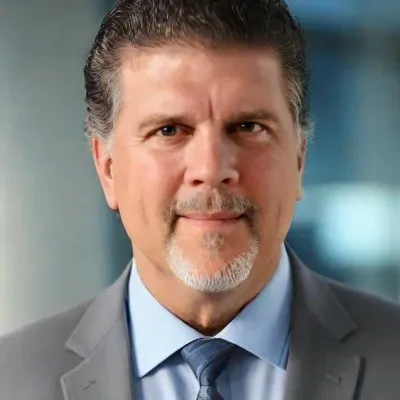
Mark Bernardin
At-risk accounts rarely collapse overnight. They erode through subtle shifts in tone, priority, and executive engagement that dashboards were never designed to detect. Usage metrics can stay strong even as executive sponsors disengage, priorities shift without notice, and stakeholder access narrows to a single champion who may not represent the full picture. By the time the dashboard catches up, the damage is already done. The CS leaders catching these signals early are the ones listening across stakeholders over time, not within a single thread.
Helping CSMs catch these early warning signs is Mark Bernardin, founder of ClearPath CX and host of the ClearPath Conversations podcast. Bernardin built his account methodology while managing multi-million-dollar enterprise portfolios at Palo Alto Networks and other cybersecurity and SaaS organizations. His diagnostic approach is built on the premise that the earliest signs of risk have almost nothing to do with product usage and almost everything to do with alignment and stakeholder coverage.
"Dashboards are not nearly as effective as we wish they would be. They support the story, but they don't really capture relationship or alignment risk," Bernardin says. To diagnose risk early, he guides reps to pay attention to changes in alignment and gaps in stakeholder density. "It's not just what's said in a meeting, but comparing priorities and tone across time and across stakeholders. The signal lies in the differences."
The single-champion blind spot: Bernardin sees a similar pattern across industries of CSMs building a strong relationship with one contact and mistaking that relationship for account health. When that contact goes silent, changes roles, or loses internal influence, the entire account becomes vulnerable overnight. "A lot of CSMs miss things when they're listening to just one person or champion inside the organization. That creates a major blind spot."
When the metrics are a mask: He points to an experience with a particular client as a defining example. By every standard metric, the account looked strong. Usage was high, the day-to-day users were engaged, and the dashboard showed green across the board, but several stakeholders within the customer organization had quietly disengaged. "When I was brought into the account, the first thing I did was identify that issue," Bernardin shares. "Then we rebuilt executive alignment and the stakeholder map inside the customer account. We were able to re-stabilize and eventually expand the account when renewal came."
Expanding stakeholder coverage sounds straightforward in theory. In practice, Bernardin says it requires reading the political dynamics of each customer organization and adjusting accordingly. Some contacts welcome it. Others guard their territory. "It really depends on the relationship," he says. "Some stakeholders are very open to building that relationship inside their organization and want your presence to be solid across the company." However, not every account works that way. Bernardin acknowledges that some contacts feel protective of what they view as their territory. "They feel that your product inside their environment is their domain, and they don't want to share that with another part of the company. You have to be more subtle about how you build out those stakeholder maps. That's where the soft skills really come into play—the rapport building, understanding someone's business love language, and helping them see that expanding the relationship is ultimately a good move for them and for the company."
Recovery is not a fire drill: From Bernardin's perspective, the problem with how most CS teams handle at-risk accounts is structural. They wait too long and then respond with volume instead of precision. More meetings, more emails, and more touchpoints fail to address the underlying reasons for the breakdown. His alternative is a 30-60-90-day recovery framework called the Path to Green that breaks the work into phased, achievable milestones. "A lot of CSMs are reactive because they respond to events instead of acting on early warning signs," he says. "The Path to Green breaks it into thirty-day chunks with defined actions at each stage. It focuses on alignment, stakeholder coverage, and visible progress."
Recovery at scale: The framework is designed to be repeatable, which matters because recovery is never a solo effort. Bernardin describes the CSM as the face of the organization to the customer, but emphasizes that the real work depends on coordinating multiple internal teams. "The CSM represents engineering and product and support and professional services behind that wall," he says. "They need to compile all the information, aggregate it, and speak intelligently to the customer. You need great communication, but a pretty deep level of technical skill as well."
That technical skill now extends to AI, which Bernardin predicts won't replace the CS function, but will replace CSMs who refuse to adopt it. "Our customers are using AI, so we need to understand it. We need to know their pain points so we can help them be successful, not just with our product, but with their platform in general." Looking ahead, he believes the CSMs who thrive will be the ones who pair that technical fluency with the soft skills that no dashboard or AI agent can replicate, like reading a room, building trust across organizational boundaries, and knowing when to listen versus push forward. Those are the skills Bernardin says turn a red account green and keep it there. "It's our job to help them understand what is ultimately going to be a good move for their company and strengthen their business."