
Mapping the New Future of Executive Buy-In for AI Success
Katherine Stone, a CX Analyst at The CX Foundation, explains why AI adoption stalls and how leaders can master the human side of transformation.

Make CX Current News one of your go-to sources on Google


AI adoption starts at the top with the C-suite.

Katherine Stone
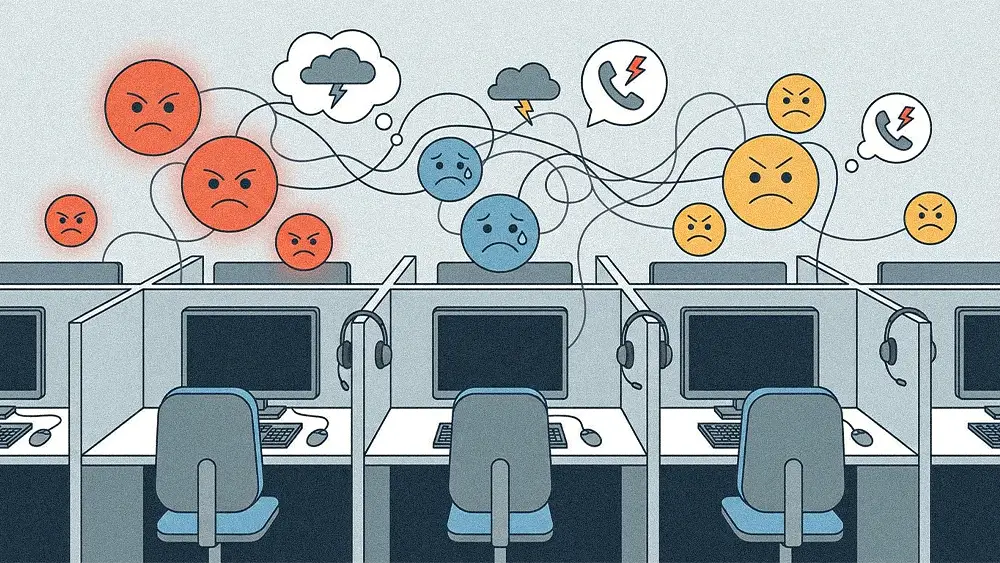
After the initial frenzy, AI initiatives are beginning to stall. For many, the reason usually isn't the technology itself, but a misunderstanding of what drives adoption. Business leaders may wish AI worked better, but the path forward requires mastering the lost art of transformation.
Among others, this idea took center stage at Cresta’s recent WAVE conference. For attendee Katherine Stone, a CX Analyst at The CX Foundation, the main takeaway was clear: AI success starts at the C-suite level, not the frontline. Drawing on over five years of experience covering B2B tech, Stone offers a distinct perspective on the human side of technological change. In her view, employee confidence is the real bottleneck.
“AI adoption starts at the top," Stone says. "Frontline agents are unlikely to buy into AI if their bosses don't use it, understand it, or talk about how it makes their daily lives easier."
A dose of reality: Some companies are flipping the script, creating forums where executives learn about AI directly from their junior employees. It's a move that fosters buy-in and reveals the organization's hidden "AI stars." However, it must be paired with honesty to be successful, Stone explains. "There’s a tendency for executives to say we won’t lose any headcount, and that’s not true," she cautions. Because AI will replace some roles, leaders owe their teams the courtesy of being direct so they can have a chance at success.
Automating the awful: With trust established, the next step is practical application. Still, many initiatives get stuck in the AI experimentation trap, Stone continues. To break out, leaders can start with low-hanging fruit that demonstrates immediate value. "If you can prove to your agents that the AI is automating the parts of their job they hate the most, you will get buy-in," she says. Rather than replacing all agents, the goal should be radically changing how they work.
For organizations moving past initial adoption, Stone says, implementing advanced tools requires advanced leadership. To counteract resistance, use AI to provide real-time agent assistance during live conversations, offering context on a customer's history and sentiment. While this requires a robust testing and optimization strategy, it helps prove the tool's usefulness to the frontline.
Here, Stone's analysis identifies two specific areas for improvement. First, she says not to discount the voice channel. When a digital channel fails, customers often want to talk to someone. If the live agent lacks context from the bot interaction, the value of the AI investment is lost. In these cases, a seamless handoff is paramount.
Second, she stresses a commitment to transparency. As bots become more advanced, they need a solid data foundation to support customer queries responsibly. Ideally, a clear governance framework should guide that commitment.
Ultimately, organizations that fail to manage the human transition risk seeing AI adoption break down, regardless of how advanced their technology is. Stone’s final advice is for CX leaders to distinguish between a vendor and a true technology partner. She suggests qualifying potential partners by asking about their onboarding roadmap and dismissing any who offer a DIY approach. In her view, the responsibility for innovation falls on the partner. "Speed is a choice," she concludes. "You don't have to be fast, but your technology partner does."