

Retention Turns CX's Costliest Problem Into Its Biggest Advantage
Cresta VP of Customer Strategy Antony Passemard says agent churn is the most expensive and most solvable problem customer experience faces. AI makes the job more manageable.
Make CX Current News one of your go-to sources on Google


When you spend eight weeks training agents and they last six to nine months, it's not good business.

Antony Passemard
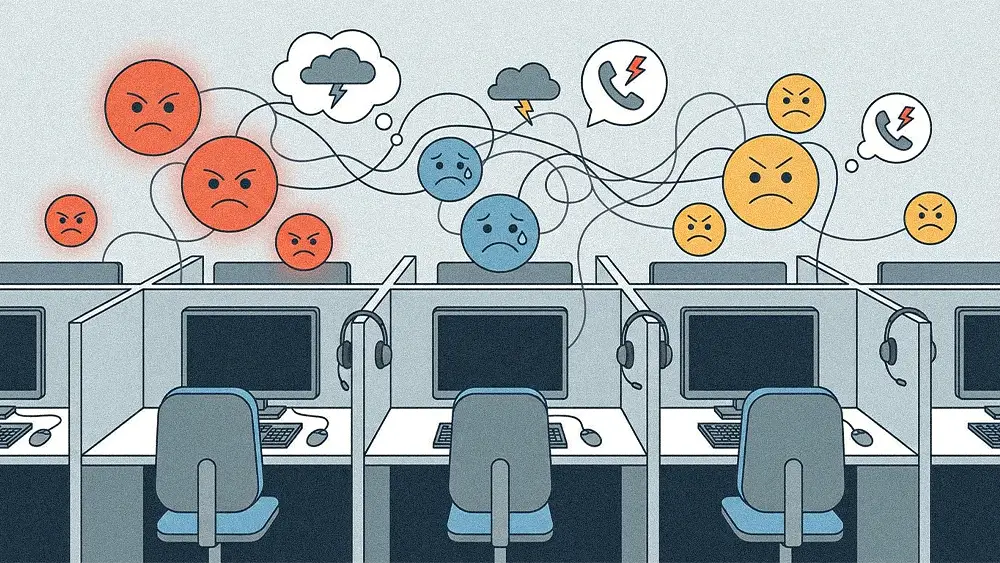
The customer experience function runs on a workforce it constantly loses. Agents take roughly eight weeks to train and frequently leave inside of six to nine months, which means the industry pays to onboard people it barely gets to keep. Executives tend to treat that churn as a fixed cost of doing business, but it does not have to be fixed, and it's not cheap. A large part of what drives agents out is the nature of the calls they inherit: the angriest, most frustrated customers, often furious before the human even says hello. The organizations bucking the trend view agent retention as an economic lever and use AI to make the job survivable, and even enjoyable, rather than simply cheaper.
Antony Passemard is VP of Customer Strategy at Cresta, where he advises enterprises on turning AI investments into measurable CX results. A former Google Cloud executive who worked on the company's contact center AI offering, with earlier stints at AWS and Salesforce Service Cloud, Passemard has spent more than a decade watching how the economics of service actually play out inside large operations. His view on the human agent cuts against the industry's instinct to treat labor purely as a cost to be minimized.
"When you spend eight weeks training agents and they last six to nine months, it's not good business," he says. His approach reframes agent churn from an unavoidable cost into a business problem with a feasible solution.
Frustration arrives before the human does
In Passemard's view, the reason so many agents burn out has less to do with the work itself than with the state customers are in by the time they reach a person. A bad automated front door poisons the interaction before it starts. "If every time I call, I get a bad bot with a bad tree that never gets to where I want, I'm wasting time. I'm going to get frustrated. And then when I eventually get to a human, I'm angry before the conversation has even started," he reasons.
Passemard speaks from direct experience, describing an hour and a half spent trying to validate an upgrade an airline had offered him at check-in. He was livid before a person ever picked up. The agent on the other end absorbs that anger, call after call, and the accumulation is what drives the turnover. "It's a massive problem because agents get all those calls where people are upset and they churn."
His insight is that improving the customer's pre-human experience isn't just a customer-satisfaction play. It directly protects the workforce, because a caller who arrives calm makes the agent's job one they can sustain.
Supported agents are better agents
Passemard is direct that agent support is a performance driver in its own right. "A happy human is going to always be better on the phone than one who's not. If you have happy service reps, you're going to get a much better satisfaction score. We've seen that."
His reference point is United Airlines, which uses insights sourced from customer conversations to inform business decisions. "One improvement they made recently was the ability to see your ranking on the upgrade list before the flight. Before, you had to call customer support to find out." As more routine transactions moved to self-service, the calls reaching United's agents predictably got harder. The company's response has been to equip them rather than rush them. United deployed real-time, in-the-moment support to help agents focus on the customer and spend less time typing and clicking. The results included a 15% improvement in average handle time and a 50% improvement in customer response time.
The principle is clear: an agent freed to actually solve the problem, rather than race a clock, delivers a better experience and feels more satisfied with the outcome. What agents want, in Passemard's telling, is simple and often obstructed. "The human agent wants to solve the customer problem. If they're able to do it, they're going to be pretty happy. If they can't, then they feel frustrated and the customer is frustrated and everybody's frustrated." This is were other AI solutions can be deployed to help them in their journey as well.
Training built from real conversations, not generic SOPs
The lever Passemard is pointed about is training, specifically the quality of the standard operating procedures most customer experience organizations train against. "We typically see that the SOPs that companies have have often fallen out of sync with reality," he shares.
The alternative, he says, is to build training from the actual conversations happening in the operation rather than idealized scripts. That grounding makes the training relevant, and relevance is what lets new agents ramp faster and reach competence sooner, which directly attacks the eight-week onboarding cost. "We create AItraining Agents out of real conversations that happen on your team, based on customer personas that are real and relevant to your business. The quality of the training is very important, and you can train people much faster when they can learn in a realistic and safe environment with an AI."
The same conversation data supports coaching that adapts to the individual agent rather than treating everyone identically. A new agent needs more guidance in the moment. A tenured one doesn't want to be interrupted with hints they no longer need. "Having that customizable, personalized help throughout the call is very important and effective when done right," Passemard says.
The keyboard-free agent
Passemard's picture of a sustainable agent role points toward removing the mechanical burden that fragments an agent's attention. The ideal is an agent who can carry an entire call without touching the keyboard, because the system handles the form-filling, the searching, and the process navigation in the background. "I'm just talking to you while things are happening on the screen. It's filling in the right form, doing the processes, guiding me. I don't have to type. I don't have to search and open tabs," he explains.
The point is engagement. An agent who's transcribing and clicking is only half-present in the conversation, while one freed from that work can actually listen, which produces both a better interaction and a more satisfying job. "The human agent is actually super engaged because they're not taking notes," Passemard says.
Passemard's driving assertion is that the labor economics of CX aren't predestined. The churn that drains training budgets and degrades service is largely produced by conditions that can be changed: the frustration customers carry in through a poor automated experience, the clock agents are forced to race without proper AI-based tools to help them, the generic training they're handed, and the mechanical busywork that pulls them out of the conversation. Fix those, and the same workforce becomes cheaper to keep and better at the job at the same time.