
At most airlines, a passenger asking about a delayed flight can hear one explanation at check-in, another at the gate and a third onboard. Each employee is accurate about their own part of the operation, but the passenger still ends up confused and suspicious. One way to address it is to give everyone who works a flight the same information, starting hours before departure.
Maria Leonora Apostol is Vice President for Customer Service Operations at Cebu Pacific, a low-cost airline based in the Philippines. She oversees airport and in-flight service, which puts her in charge of nearly every face-to-face interaction between passengers and staff on the day of travel. Apostol joined the airline in 2019 as Vice President of Cabin Services, after more than two decades in hospitality that included managing resorts in the Philippines and Vietnam and leading a hotel group as Group General Manager. Her years in both industries give her a close view of how a delay explanation can splinter as it moves from one employee to the next.
“Behind the scenes, we know there are many variables changing, but the customer’s experience should feel coordinated, consistent and purposeful,” Apostol says. Pilots, cabin crew, ground handlers and boarding agents each see a different piece of a flight, so the same delay can sound different depending on who explains it. Apostol sees it as the airline’s responsibility to bring those perspectives together into one message for the customer.
Every team in sync
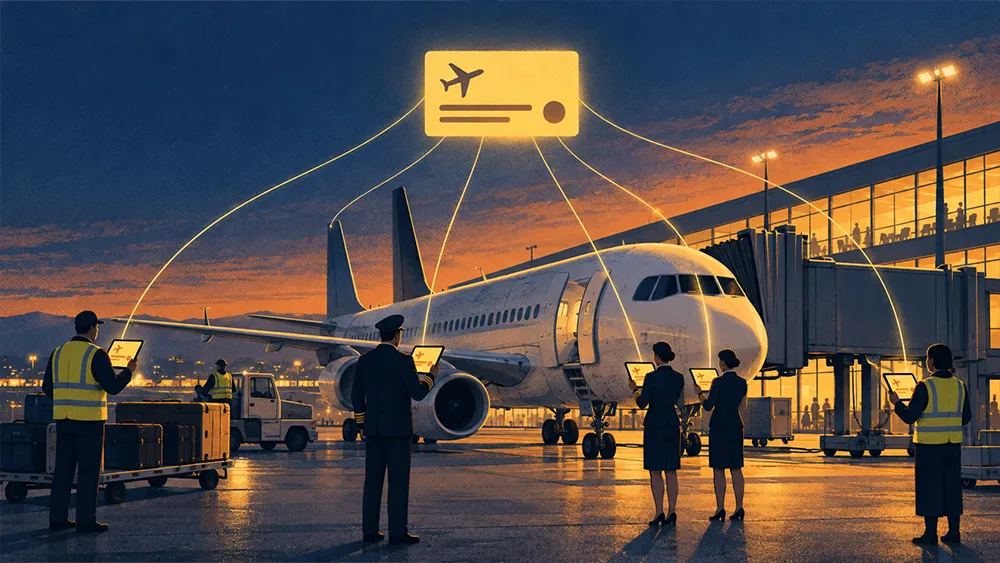
Each flight at Cebu Pacific gets its own group channel, which opens automatically three hours before departure. Everyone assigned to that flight joins it, including pilots, cabin crew, ramp staff and network control, and they all see updates as they come in. If a flight is running late or a crew member is held up, the whole team knows at once, and anyone with a question has one place to ask it. The airline gave its staff iPads and set up the system about five or six years ago in preparation for growth, and it now runs across hundreds of flights a day. The approach can work for any operation where several teams serve one customer. “It automatically pulls everyone in even before the flight is built. You know if it’s going to be delayed, or if somebody’s not going to make the flight. It’s like you have 1,000 eyes,” Apostol says.
A common channel keeps staff aligned, but conditions can still change quickly. Creeping delays, where one change follows another, are the hardest to communicate, and weather is a frequent cause because it can shift from one minute to the next. In those situations, the airline avoids overpromising and tells passengers what it knows at that point.
When the next step is unclear, staff tell passengers when they’ll hear more. “If you tell them you’ll give them an update in two hours, then you come back in two hours,” Apostol says. A promise kept on schedule gives passengers something dependable while the rest of their day stays uncertain.
When to hand off
Cebu Pacific uses an AI chatbot to answer routine passenger questions. It’s most useful when many people need answers at once, such as during delays and cancellations or the airline’s piso sales, when base fares drop to one Philippine peso and demand spikes. “It’s really helped us scale and address passenger questions when there are disruptions. Scale, consistency and speed are where it’s been most helpful,” Apostol says. Standardized chatbot answers also support the airline’s larger goal of giving every passenger matching information. Apostol sees plenty of room to grow, noting that companies everywhere are still exploring how far AI can go, Cebu Pacific included.
For emotional or sensitive situations, she sees human agents as essential, since those conversations need judgment and empathy. When she tested the chatbot herself, it offered to connect her with a live agent and did so right away when she asked. “It doesn’t frustrate you to the max before you go to speak to a live agent. Not everyone is comfortable speaking only to a chatbot yet,” she says. Apostol’s two daughters would rather use a chatbot, but she believes most passengers still want to know a person is available. Keeping that option visible helps those passengers feel at ease starting with the chatbot.
Behind the scenes, we know there are many variables changing, but the customer’s experience should feel coordinated, consistent and purposeful.
 Maria Leonora ApostolVP, Customer Service Operations, Cebu Pacific Air
Clarity under pressure
When a flight or any service breaks down, the first priority is to communicate quickly, since problems grow when updates lag. Honesty matters too, but it takes some judgment. Customers deserve context about what’s happening to them, while the inner workings of a business rarely change what they need to know. The goal is to share everything that affects the customer without burying them in internal detail. Some situations leave staff with little they can fix, and in those moments clear, timely communication becomes the main thing a company can offer. “What passengers will remember more than the disruption is how you treat them,” Apostol says.
Apostol sees operations growing more complex while customer expectations get simpler. Companies now manage more data and more variables than ever, and people mostly want to know what’s happening and what comes next. The organizations that keep every team and channel telling the same story are best positioned to give them that. “What customers want is to understand what we know and what’s happening around them. What they want is the confidence that someone is looking after them,” she says.