
The Surprise Behind Stalled AI Rollouts: 81% of CX Leaders Blame Integration, Not Intelligence
A new Cresta survey of 300 CX leaders finds AI is stalling on integration and data quality, not intelligence. Only 7% have easy access to conversation data.

Make CX Current News one of your go-to sources on Google


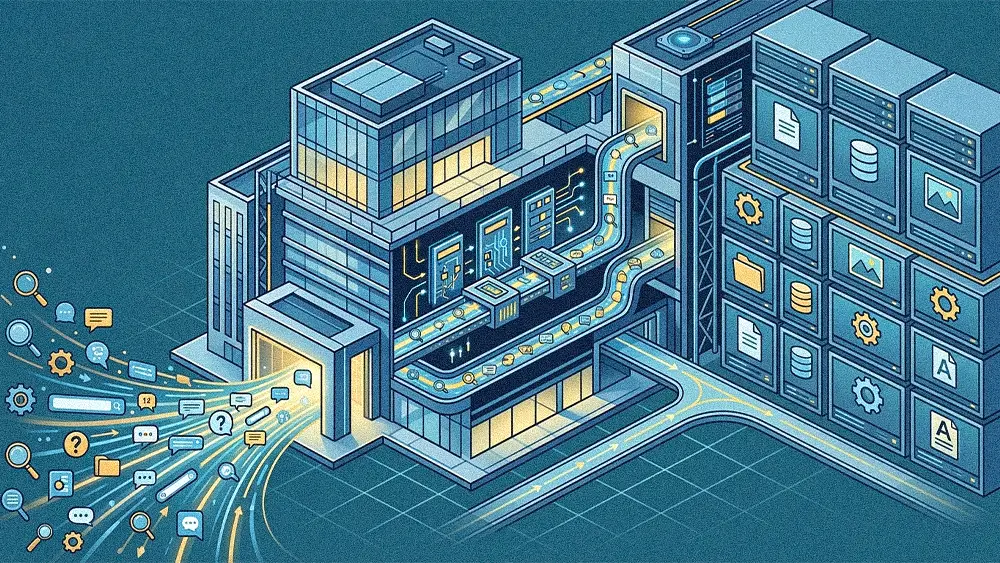
The most expensive mistake in customer experience right now is assuming the hard part is the AI. Cresta's survey of 300 CX, support, and operations leaders finds that the single biggest barrier to adoption isn't model quality or accuracy or even cost. It's integration complexity, named by 81% of leaders, with poor data quality close behind at 53%. The models work. The plumbing underneath them doesn't, and that gap is where the next competitive advantage in CX will be won or lost.
The Data's There, It's Just Inaccessible
Read the survey closely, and a subtler number does more damage than the headlines: Only 7% of leaders say their conversation data is easily accessible across the business. The conversations that hold every signal about why customers churn and where service breaks down are, for the other ninety-three, locked where nobody can reach them. You cannot point a smart system at data you can't get to.
Craig Howarth, Founder and CEO of Blackadder Consulting, puts the consequence in plain commercial terms: "If you don't have the data and integrations ready, you're not really in a position to take advantage of what's being sold." The vendors are selling capabilities that most buyers lack the foundation to use.
What that foundation costs is the part nobody quotes in the pitch meeting. "You might have to go and rewrite your knowledge base just to get into the game," Howarth warns. That is not a line item anyone budgeted for, and it explains why so many AI pilots stall not in failure but in limbo, waiting on data work that was always the real project.
Agents Absorbed The Mess
Aurelia Pollet, VP of Customer Experience at CarParts.com, frames why the mess stayed hidden this long: people were absorbing it. "For years, our call center agents absorbed the problems in our systems and worked around them. When you put AI on top of it, you can't do that anymore." A human agent improvises around a broken record, a missing field, a workflow that contradicts itself.
Automation has no such judgment, so it does something useful before it does anything impressive. It exposes every operational shortcut the org has been quietly subsidizing with human effort, and, as Pollet warns, without guardrails, it will share the resulting wrong answers directly with customers.
That is the cleanest way to read the customer-facing failures the report catalogs. Leaders say the bots that frustrate customers misread intent, can't handle anything complicated, lose the thread, and hand off badly. None of those are intelligence problems. They are context problems, and context is a data and integration problem wearing a customer-service mask.
Ivo Koster, Director of Commercial Support at Precor, who previously led customer experience for Xbox at Microsoft, has seen the canonical version: "A classic failure is when a bot hands off to an agent who has zero context, with no conversation history or record of what the customer clicked on the website. The interaction is broken because the agent is forced to start from the beginning by asking the customer to explain everything they have already done." The model didn't fail there. The connective tissue between systems did, which is the 81% barrier, showing up as a customer repeating their order number for the third time.
Maybe AI Didn't Fail You
James Casper, a digital transformation and CX executive whose track record runs through Bio-Rad and Thermo Fisher, refuses to let the technology take the blame. "Maybe AI didn't fail you. What failed you is that you didn't understand how you wanted to run your business. If you had defined the process first and then applied AI, you would have had a clear signal of where to use it and where not to use it."
That moves the conversation off the vendor and back onto the buyer's own house, which is where the work lives. Miguel Guillen, Senior Director of Technology and Data at Visory Health and a former architect at Microsoft, AWS, and PepsiCo, says it more bluntly: "We've started the house from the roof and forgot about the foundation. AI only works when you start with a clear problem and a real business case."
Henré Venter, Head of Portfolio Operations at Flyp, compresses the whole readiness argument into one image: "AI is a multiplier, but only if you've got the right structure in place. If your foundations aren't solid, it doesn't fix the problem; it just makes the mess bigger." A multiplier applied to a mess multiplies the mess. That is the risk every team rushing to deploy is underwriting without naming it.
Khushboo Mishra, Assistant Vice President and Finance Leader at HSBC, states the dependency at its root: "If the source data is wrong, AI will not be able to correct it. It all depends on the data quality, so we have to improve that first." No model reasons its way around a wrong number. As Alex Richards, Regional VP of Partnerships at Quantum Metric, distills it: "AI without orchestrated data is just a smart tool operating on bad information."
What A Solid Foundation Actually Buys
Get the foundation right, and the conversation turns to what these tools are for, where the data points to something near-universal, even if it remains leadership perception. Most leaders report that automation is letting them redeploy people rather than shed them, and the practitioners describe the same shift without the spin. Richards has no patience for the headcount-cut narrative. "The real prize isn't fewer jobs," he says. "It's better jobs, and eliminating more dull tasks."
Koster describes what the redeployment buys: "The vision is to shift our people toward building trust and relationships, while automation ensures the promises we made are kept." And Venter offers the cheapest test of whether any of it is working, which is to ask the people doing the work. "Don't neglect your CS team," he says. "They will also tell you, because they are on the forefront, if it's not improving their life, then it's also not improving the customer's life."
There is still a line past which the foundation can be perfect, and the machine should step back. Casper marks it: "AI works really well when a process has clear answers and structure, but once emotion enters the picture, humanity still wins." What all of this asks of CX leaders is harder than picking a product, which is probably why so few are doing it. Mishra describes where the human role lands once the rote work is gone: "Today, humans are data gatherers. And tomorrow, they have to be judgment makers."
Whether your team gets to make that move depends on a decision made long before any contract is signed: whether your data is connected, clean, and reachable, or still sitting where ninety-three percent of leaders can't get to it. The smarter AI is already on the market. The advantage is going to the buyers who spent the unglamorous quarters making themselves ready to use it.