

All articles
When AI Outpaces Playbooks, Customer Success Professionals Crowdsource The Gap
Nuwika Reddy, Customer Success Manager at Entrust, explains why peer experience is becoming the knowledge infrastructure playbooks can no longer provide.
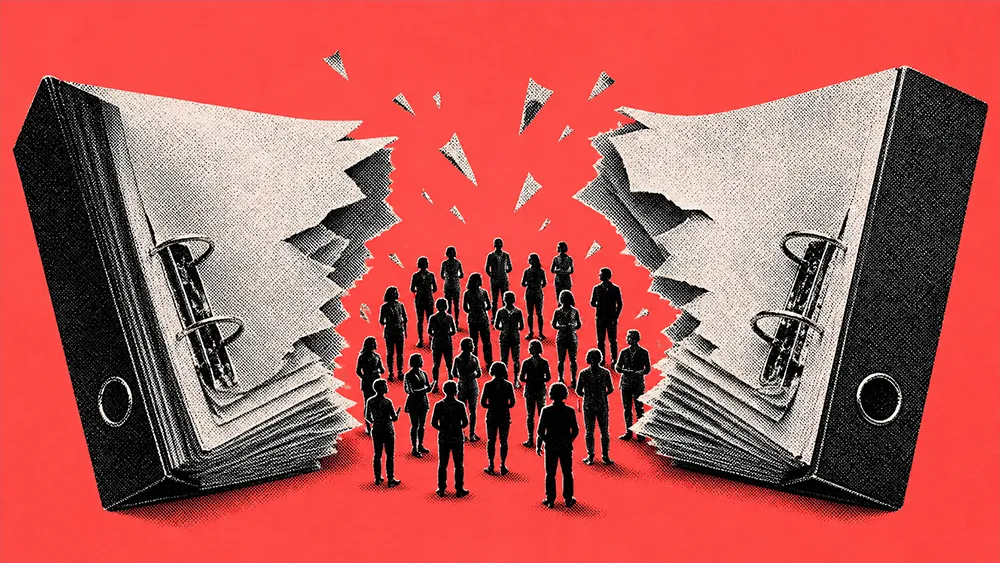

Customer success is shifting from playbooks to experiences. What no course or tool can give you is someone telling you what actually worked in their account, and what didn't.

Nuwika Reddy
AI is reshaping the day-to-day work of customer success faster than most training programs can track. The operational layer—drafting emails, building QBR decks, summarizing calls—is increasingly handled by tools, pushing the role closer to revenue generation and retention and further from relationship management. But as AI adoption accelerates across the profession, the playbooks that once guided the work haven't kept pace. Many practitioners are filling that gap by crowdsourcing strategies in real time.
Nuwika Reddy is a Customer Success Manager at Entrust, a data security and identity, payments, and data security solutions. She believes the customer success profession is at a pivotal moment, with AI reshaping the role more quickly than formal training programs can adapt.
"Customer success is shifting from a process-driven function to one centered on experience and strategic impact. While courses and tools provide a strong foundation, the most valuable insights often come from practitioners who share what has worked in real customer environments, and what hasn't," Nuwika says. She believes that as AI takes over more of the executional work, the competitive advantage for CSMs will lie in their ability to apply sound judgment, think strategically, and learn continuously from peers.
When AI Automates Execution, Strategic Thinking Becomes Essential
AI is changing how customer success professionals work by dramatically reducing the time spent on routine operational tasks. Follow-up emails, meeting summaries, and presentation preparation can now be completed in seconds rather than hours. Nuwika sees this as an opportunity for CSMs to redirect their energy toward activities that require empathy, human judgment, and business acumen.
"AI will not replace CS professionals because trust, empathy, and relationship building remain fundamentally human capabilities," she says. "The most effective CSMs will be those who leverage AI to work more efficiently while dedicating more time to strategy and customer outcomes." That freed-up capacity raises a harder question: what should CSMs actually do with it? The answer, Nuwika argues, isn't found in another course or certification. It's found in conversations with people who have already figured it out.
What Playbooks Alone Cannot Teach
Customer success looks different in every organization. One company defines it as churn management, another as product adoption, a third as revenue expansion. That variation means standard onboarding and certifications often provide only part of the picture.
"Connecting with professionals at every level has helped me understand how organizations define and approach customer success," Nuwika says. "Each perspective broadens your understanding of what the function can achieve." Peer communities and industry events create opportunities to exchange practical advice and learn directly from professionals who have navigated similar challenges.
At a networking event in Pune, Nuwika observed how a simple discussion about individual strengths and development areas led to meaningful coaching between peers. These interactions often provide actionable insights that are difficult to capture in formal training materials.
Online communities such as Customer Success Collective and Women in Customer Success offer similar value by enabling professionals to exchange ideas and solve real-world challenges collaboratively.
“When I sought advice on how to re-engage unresponsive customers, the recommendations were highly practical, such as using phone outreach or sharing proactive updates that demonstrated value,” Nuwika says. “Those kinds of insights are incredibly useful because they come from professionals who have tested these approaches firsthand.” It is the kind of tactical problem-solving no playbook anticipates in advance.
The Power of Community and Continuous Learning
Finding these communities can start with a simple search on LinkedIn. “All it takes is one connection to open the door to an entire community of professionals willing to share their experiences and support your growth,” Nuwika says. The knowledge gained from these interactions can be applied internally to strengthen teams and improve performance. By translating external insights into enablement sessions and best practices, professionals can create lasting value for their organizations. “Being actively involved in the customer success community has accelerated both my professional development and my confidence as a leader,” she says.
As AI tools generate increasingly sophisticated data and predictions, the real differentiator lies in a CSM’s ability to interpret those insights and translate them into meaningful action.
"AI without clear outcomes and action plans is simply another dashboard," Nuwika says. "The true value comes from knowing how to apply those insights strategically to drive customer success." She believes the future of customer success belongs to professionals who combine technology with strong business judgment, empathy, and a commitment to continuous learning. "The CSMs who thrive will be those who know how to harness AI, think strategically, and turn insights into measurable results. That is what truly defines excellence in customer success."