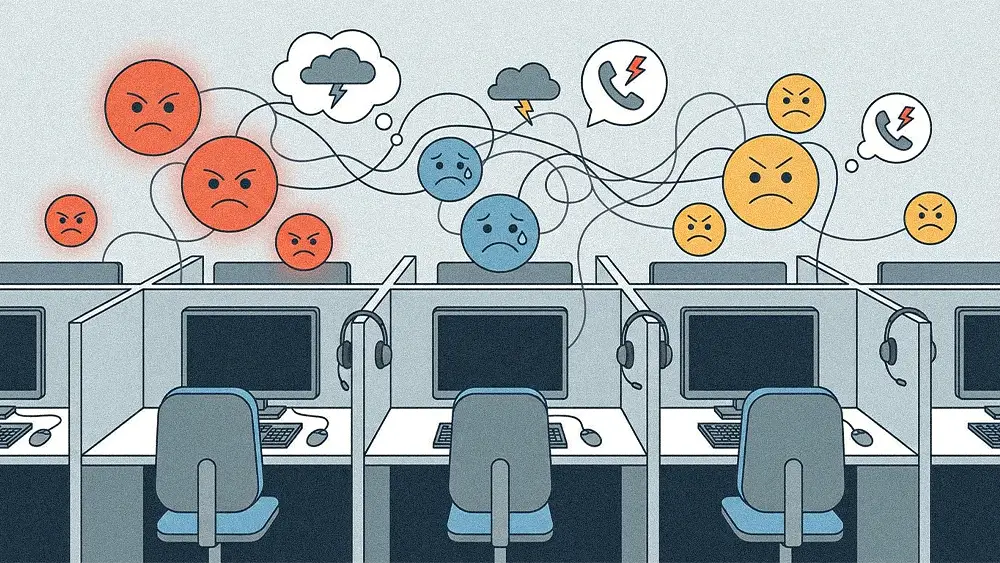

Clean Data And Balanced Metrics Turn Customer Service AI Into A Loyalty Advantage
Steven Jeffes, a customer experience consultant and former CX director at INEOS Automotive, on why the groundwork before AI decides whether it strengthens customer loyalty or falls short.

Make CX Current News one of your go-to sources on Google


AI needs an intelligent base to sit on, and building that solid AI foundation is the work most companies underinvest in.

Steven Jeffes
Customer service is being rebuilt around AI, and companies aren't all getting the same results. The difference is the data underneath. These tools work from the customer records a business already keeps, so the companies that clean up those records first are pulling ahead. Rush the technology onto messy data to save money, and it does less for you. That split, between companies that do the prep work and those that don't, is becoming a clear divide in customer operations.
Steven Jeffes is a Customer Experience Consultant who helps companies build the data and operating foundations AI depends on. His career spans nearly two decades in customer experience and CRM, including a recent run as Director of Customer Experience, Americas at INEOS Automotive, the British maker of the Grenadier vehicle, principal-level consulting at Legendary CX, and earlier work at Accenture. Jeffes publishes widely on customer strategy and AI adoption, and he keeps returning to one point about why so many rollouts underdeliver.
"AI needs an intelligent base to sit on, and building that solid AI foundation is the work most companies underinvest in," says Jeffes. As AI becomes standard across customer operations, the advantage will come less from the technology itself and more from the quality of the foundation beneath it. The result is mostly set before the software goes live, by how much preparation came first. Which model a company chooses matters much less.
Build the foundation first
Two questions separate how companies approach this. One camp asks how much service it can automate. The other asks what it wants customers to feel, and treats cost savings as a byproduct of getting there. The second question is harder, because the answer takes longer than a quarter to deliver, and it's the one that decides whether the groundwork gets done.
That groundwork is more than tidy records. The piece companies most often miss is a case taxonomy, a structured catalog of known issue types that helps the system classify incoming issues accurately. "When a call doesn't match anything, there's no case taxonomy for it, so the AI guesses. It picks the closest thing it has, comes back with the wrong answer, and cycles the customer around again and again," he says.
The gap usually surfaces as a timeline problem. Jeffes often sees leaders expecting AI to deflect calls within six months, when the real timeline runs closer to a year once the state of the data and issue tagging, plus the team's appetite for change, are on the table. Do that work first, the way the strongest operators assemble integrated customer data before adding intelligence on top, so the technology has real context to draw on.
Even then, measurement is where teams slip. Under pressure to show AI is working, they point to one number, usually cost or deflection rate. Automate the simplest calls and that number looks great, but the average handle time on what's left can rise, because the quick tickets that used to pull it down are gone. The work looks efficient on paper while the fuller picture goes unread.
Read the numbers together
Jeffes weighs the operational metrics against how the customer actually felt, one call at a time. Cost and handle time sit on one side, customer satisfaction, or CSAT, on the other. "Average handle time might go down, but you have to measure CSAT in the context of that handle time," Jeffes says.
The failure he catches most often hides inside tickets marked resolved. A case gets closed in record time, then the same problem returns as a brand-new ticket with no link to the first, so the record shows a fast, clean fix while the customer is still on the phone trying to sort it out. "A lot of companies just reopen a new ticket for the same issue. There's no matching of customer to issue," he adds.
He uses AI to expose the pattern, following one caller across separate tickets and pulling each satisfaction score into a single view, so a supposed one-and-done resolution turns out to be someone who had to call twice. Measured honestly, a real win shows up across several measures at once. First-call resolution, the share of issues solved on the first try, goes up while cost and handle time come down.
Cutting costs this way holds real appeal, because the savings show up in this year's results while the customer damage takes years to surface, long enough that whoever made the call has often moved on before it does. Jeffes calls it a ticking time bomb, a customer base that erodes quietly as loyalty fades.
The companies that treat experience as the goal start by defining what better looks like for their customers, then hold every rollout to that standard. It is the same discipline that separates the leaders and laggards once AI reaches the front line. "If you want to do it right, you lay out the strategy and the vision to deliver customer service that's better tomorrow than it was today," Jeffes says.