
Cresta's Head of Strategy On How AI Raises The Stakes For Human Customer Interactions
Brandon Teegen, Head of Strategy at Cresta, sees AI concentrating risk in contact centers, shrinking headcount while elevating human agents to higher-stakes, trust-defining work.
Make CX Current News one of your go-to sources on Google


We’re not just shrinking human interactions. We’re making the human interactions really hard, and that’s exactly why humans are handling them and not an AI agent.

Brandon Teegen
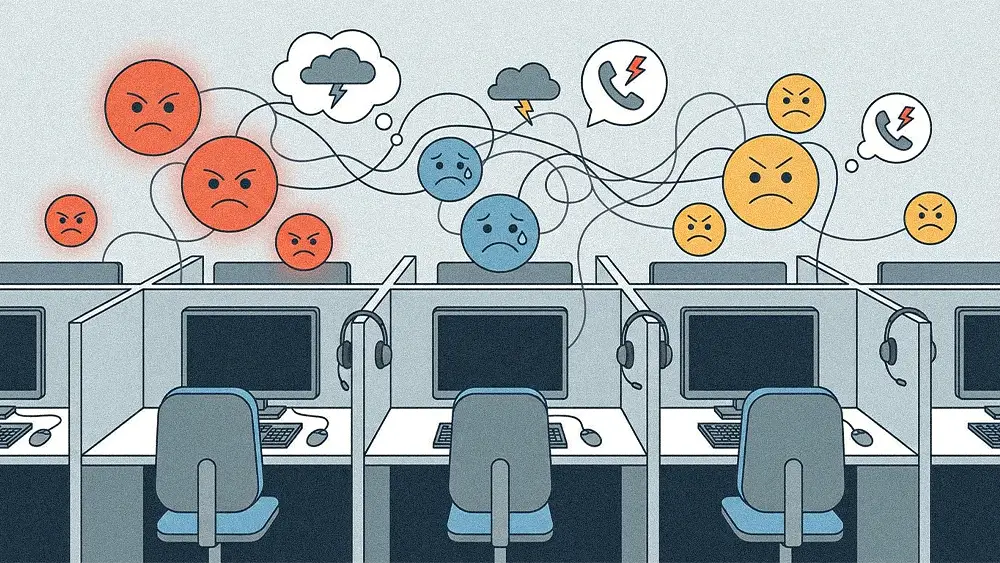
In the modern contact center, automation concentrates risk. As AI and chatbots take over more of the high-volume, routine interactions, the work that remains for human agents is becoming fundamentally more difficult and emotionally charged. The result is a smaller but more specialized class of human agent tasked with navigating the very issues AI cannot. The conversations that reach a person will carry more weight, making human agents more consequential to customer loyalty and trust.
Brandon Teegen is the Head of Strategy and Solutions at Cresta and has previously served in strategic roles at major technology companies like Okta and Salesforce. He believes the future of the contact center isn’t a battle between human and machine. Instead, he predicts a redistribution of difficulty that places a higher premium on human performance, agent retention, and the consistency of the entire customer experience.
"We’re not just shrinking human interactions. We’re making the human interactions really hard, and that’s exactly why humans are handling them and not an AI agent," Teegen says. This explains why, despite widespread adoption of automation, many business leaders find a gap between AI’s promise and its performance. Automation readiness is uneven across organizations and is dependent on various signals.
Intent is everything: Teegen advises that the most frequent type of call will determine whether AI agents are likely to be an effective solution. "Are these conversations that can be transactional and the customer just wants to find some information and move on with their day? Or are they calling in because they're really frustrated and they need to speak to someone because they've been trying to self serve for so long?"
Scale-ready systems: The next factor to consider is the sophistication and stability of a company's tech stack. "All the systems required to support the customer journey must be accessible and ready to use at scale with reliability," he says.
In bots we trust: Finally, customers must be willing to actually engage with AI agents. "The real risk is a company suddenly realizing they have fewer humans because they thought they could automate everything, but their customers don't want to talk to a robot." Teegen encourages brands to consider how they'll help customers develop the comfort and trust required to use the technology successfully.
Because AI is not yet equipped for the highest-stakes problems, Teegen stresses that human augmentation should be a core strategy. The real risk emerges when companies automate the easy work but fail to support the agents now facing a relentless stream of complex problems. That’s why AI-powered tools that help agents become more empathetic and effective are becoming so vital.
Raising the bar: Teegen describes the shift as a narrowing of the role rather than an erosion of it. Automation reduces volume, but it raises the bar. Human agents move away from repetitive tasks and toward complex, emotionally charged interactions where judgment and trust matter most. These agents will be responsible for the moments that define customer trust, retention, and brand perception. "They’re going to get paid more and have more skills, because the tasks they handle will be the ones that automation couldn’t," Teegen says. The workforce shrinks, but its importance grows.
That evolution demands a new operating model. Teegen envisions a future where supervisors manage hybrid teams of human and AI agents, treating new AI deployments much like new human hires that need to be onboarded and trained. The approach relies on a holistic system where insights from human conversations are used to make automation smarter and data from automation is used to better support agents.
It creates a self-reinforcing loop that de-risks the transformation while promoting a more consistent, unified customer experience across every channel. Agents, Teegen says, will benefit as well. "They will be incentivized, stronger, and more valuable because they are contributing in a more significant way."